
Bass Guitar Course in Singapore
Learn bass guitar in Singapore with structured lessons for beginners, children, teenagers and adults. Develop your technique, timing, groove, fretboard knowledge and bassline skills through practical, song-based lessons. Choose from small group, dual or individual classes based on your level and goals.
Beginner Friendly
Suitable for ages 6+ and all experience levels
Practical Learning
Build timing, groove and bassline control
Practical Learning
Learn through songs and real playing situations
Flexible Classes
Small group, dual and individual lessons
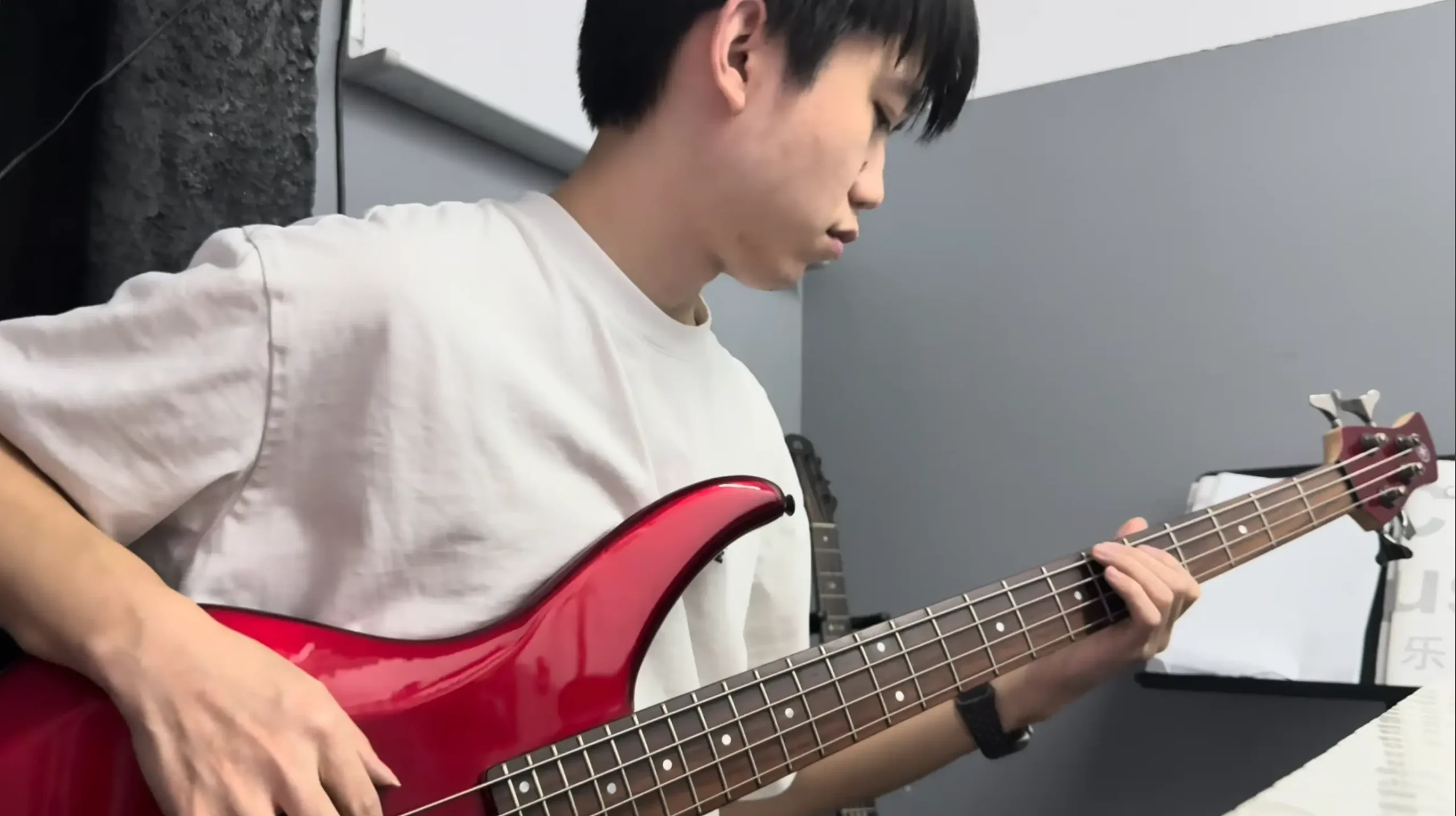
Learn Bass Guitar in Singapore
A Bass guitar course is a structured learning programme that teaches students how to play the bass guitar with accurate technique, stronger timing, rhythmic control, and musical confidence.
Bass guitar connects rhythm and harmony, working closely with the drums while supporting chords, melodies and vocals.
A bassist helps shape the groove, movement, energy, and foundation of a song. Students learn how to hold and control the instrument, produce clean notes, follow rhythm patterns, understand chord progressions, create basslines, and play along with other instruments.
What Does a Bass Guitar Do?
The bass guitar provides the low-frequency foundation of a song and connects rhythm with harmony. A bassist works closely with the drums to establish the pulse and groove while supporting chord progressions, melodies, vocals, and other instruments.
A well-constructed bass part can:
| Role Play | Role Play |
|---|---|
| Role Play Establish the rhythmic foundation |
Role Play
Connect drums with chords and harmony |
|
Role Play
Support vocals, guitars, and keyboards |
Role Play Strengthen transitions between song sections |
| Role Play Control the movement and energy of a song | Role Play Add groove without overcrowding the arrangement |
| Role Play Guide other musicians through chord changes | Role Play |
Students therefore learn more than individual notes. They develop the listening, timing, and ensemble awareness required to support a complete musical arrangement.
Who Are Bass Guitar Lessons For?
The Bass guitar course is suitable for learners with different ages, experience levels, and musical goals.
Beginners
The Bass guitar course for complete beginners is suitable for those students who have never played bass before. Lessons include posture, bass components, hand positioning, fingerstyle or pick technique, basic notes, rhythm counting, simple scales, and beginner-friendly basslines.
Intermediate & Advanced Players
The Bass guitar course for existing players is suitable for students who already understand basic notes or basslines. Lessons help improve groove, timing, scales, fretboard knowledge, chord progression awareness, improvisation, and complete song playing.
Children
Age-appropriate lessons introduce young learners to bass technique, rhythm, coordination, simple basslines and songs in a structured and encouraging environment.
Teenagers
Teenagers can learn bass through pop, rock, funk, blues, jazz and contemporary songs. Lessons develop rhythm, groove, technique, bassline playing, musical confidence, and band awareness.
Adults
The Bass guitar course for adults is suitable for beginners, hobby learners, returning musicians, and existing bass players. Adults can learn at a comfortable pace while focusing on practical technique, favourite songs, groove development, and band-playing skills.
What You'll Learn
The Bass Guitar Course develops the technical, rhythmic and musical skills needed to play bass with greater confidence. Students can build their technique and fretboard knowledge while developing timing, groove, scales, bassline construction, improvisation and practical song and band-playing skills.
Bass Guitar Basics
Students learn the main parts of the bass guitar, how the instrument is tuned and how its controls, strings and fretboard work together.
Posture & Technique
Lessons cover suitable sitting or standing posture, strap height, arm position, wrist alignment, fretting-hand placement, and controlled movement across the instrument.
Fingerstyle Technique
Students learn how to alternate the index and middle fingers, control attack, produce an even tone, and move efficiently between strings.
Pick Technique
Students who prefer pick playing may practise grip, downstrokes, alternate picking, string control, and rhythmic consistency.
Muting and Note Control
Lessons introduce left-hand and right-hand muting, unused-string control, clean note starts, note duration, and controlled note endings.
Fretboard Knowledge
Students learn string names, note positions, root notes, octaves, common patterns, and how to move between different areas of the fretboard.
Rhythm & Counting
Students learn how to recognise the pulse, count rhythms, follow tempo, and remain synchronised throughout a song.
Timing & Note Control
Lessons develop accurate note placement, rests, sustained notes, short notes, and the ability to enter and stop at the correct time.
Groove Development
Students practise combining rhythm, note choice, accents, articulation, and repetition to create basslines that support the feel of a song.
Syncopation and Rhythmic Variation
More experienced students may explore off-beat notes, rhythmic displacement, rests, ghost notes, and stylistic groove variations.
Drum Coordination
Students learn how the bass relates to the kick drum, snare, hi-hat, fills, and changes in drum patterns.
Scales and Finger Patterns
Students practise major, minor, pentatonic, and other suitable scales to improve technique, fretboard awareness, and musical vocabulary.
Root Notes and Chord Tones
Lessons explain how bass parts relate to chords through root notes, thirds, fifths, sevenths, and other appropriate chord tones.
Chord Progressions
Students learn how to follow chord changes and choose notes that support the harmony of a song.
Octaves and Connecting Notes
Students may use octaves, passing notes, approach notes, and scale tones to connect chords and add movement to a bassline.
Bassline Construction
Exercises help students create bass parts using rhythm, chord tones, repetition, variation, dynamics, and suitable musical space.
Improvisation
More experienced learners may develop spontaneous bass ideas using scales, chord tones, rhythmic motifs, and stylistic vocabulary.
Song Structure
Students learn to recognise introductions, verses, pre-choruses, choruses, bridges, instrumental sections, breakdowns, and endings.
Ensemble Awareness
Lessons develop the ability to listen to drums, vocals, guitars, keyboards, and other instruments while maintaining the bass part.
Dynamics and Musical Space
Students learn when to play more strongly, reduce intensity, simplify a part, leave space, or build energy according to the arrangement.
Rehearsal Skills
More experienced learners may practise counting into a song, following section changes, recovering from mistakes, communicating with musicians, and maintaining a consistent performance.
Your Learning Progression
Progress depends on the student’s previous experience, coordination, practice consistency, and musical goals.
Beginner Bass Guitar Level
Learn basic technique, fretboard notes, rhythm, simple scales, root notes and beginner-friendly basslines.
Intermediate Bass Guitar Level
Develop stronger groove, timing, chord awareness, fretboard knowledge, bassline variation and complete-song playing.
Advanced Bass Guitar Level
Refine syncopation, chord-tone playing, improvisation, stylistic grooves, dynamics, arrangement and ensemble performance.
How Bass Guitar Lessons Work
The Bass Guitar Course at Focus Music follows a guided process covering student assessment, technique development, song-based practice, instructor feedback and complete-song application.
Initial Assessment
The instructor reviews the student’s previous musical experience, rhythm, coordination, technique, song preferences, and learning goals.
Instrument Setup
Students receive guidance on posture, strap position, tuning, hand placement, amplifier setup, and producing a clean, controlled sound.
Technique and Rhythm Development
The instructor introduces the fingerstyle, pick, muting, scale, rhythm, timing, or fretboard exercises needed for the lesson.
Suitable Song Selection
A song or bassline is selected according to the student’s level, musical interests, and required area of development.
Section-by-Section Practice
The bass part is divided into manageable sections so students can improve note accuracy, timing, groove, transitions, and coordination progressively.
Instructor Feedback
Students receive corrections on posture, hand movement, tone, muting, note duration, rhythm, fretboard movement, and musical interpretation.
Bass Guitar Class Options
The Bass Guitar Course at Focus Music offers structured classes where students practise technique, rhythm, scales, basslines, groove, music theory and songs with instructor guidance.
Small Group Bass Guitar Class
A Small Group Bass Guitar Class is suitable for students who enjoy learning with others in a focused class environment. Students can develop rhythm, listening skills, motivation, and musical confidence while receiving instructor guidance.
Dual Bass Guitar Class
A Dual Bass Guitar Class is designed for two students learning together. It is suitable for friends, siblings, couples, or learners who prefer a shared learning experience.
Individual Bass Guitar Class
An Individual Bass Guitar Class provides one-to-one instruction based on the student’s technique, progress, song preferences, and musical goals.
Bass Guitar Course Fees
Dual Class
Why Choose Focus Music for a Bass Guitar Course?
Established Since 2002
Focus Music has provided practical music education in Singapore for more than two decades.
Groove Training
Develop timing, pulse, rhythm, and bassline movement through practical exercises.
Band Awareness
Understand how bass supports drums, vocals, guitars, and keyboards.
Song Application
Apply techniques through popular music and realistic playing situations.
Progressive Lessons
Build from basic posture towards improvisation and band performance.
Meet Our Bass Guitar Instructors




What Our Students Say
Bass Guitar Course FAQs
Is bass guitar different from electric guitar?
Yes. Bass guitar mainly provides low-frequency rhythm, groove, and harmonic foundation, while electric guitar commonly plays chords, riffs, melodies, rhythm parts, and solos. The instruments require different techniques and learning programmes.
What lessons do beginners learn in bass guitar lessons?
Beginners learn posture, bass components, hand positioning, fingerstyle or pick technique, simple notes, rhythm counting, basic scales, root-note movement, muting, and easy basslines.
What do advanced bass students learn in a Bass guitar course?
Advanced students refine syncopation, stylistic grooves, fretboard knowledge, chord tones, improvisation, complex basslines, ensemble awareness, dynamics, performance control, and personal musical expression.
Which music genres are covered in the Bass guitar course by Focus Music?
At Focus Music, students may explore pop, rock, funk, blues, jazz, and contemporary bass styles according to their interests, level, and selected songs.
Do students learn how to play with a band?
Yes. Our Bass guitar lessons cover drum coordination, song structure, chord changes, listening skills, dynamics, rehearsal awareness, and supporting other instruments.
Is there any age limit to join the Bass Guitar Course?
No, there is no age limit defined to join the bass guitar course. The course is suitable for children aged 6 and above who can follow instructions and practise regularly.
Can I book a trial lesson?
Yes. Students can book a trial lesson to experience the teaching approach, discuss their goals, and identify the most suitable class format.
Ready to Start Playing Bass Guitar?
Develop your technique, timing, groove and bassline skills through practical lessons tailored to your level and musical goals.